Showing posts with label economy. Show all posts

Saturday, October 10, 2015

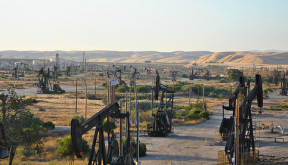
It's Time for the United States to Start Worrying About a Saudi Collapse

As if there weren’t already enough problems to worry about in the Middle East, Saudi Arabia might be headed for trouble.

From plummeting oil prices to foreign-policy missteps to growing tensions with Iran, a confluence of recent events is mounting to pose some serious challenges for the Saudi regime. If not properly managed, these events could eventually coalesce into a perfect storm that significantly increases the risk of instability within the kingdom, with untold consequences for global oil markets and security in the Middle East.

Here are some of the percolating problems that could throw the country off kilter.

Fissures Within the Royal Family. Last week, the Guardian published two letters that an anonymous Saudi prince recently circulated among senior members of the royal family, calling on them to stage a palace coup against King Salman. The letters allege that Salman, who ascended to the throne in January, and his powerful 30-something son Deputy Crown Prince Mohammed bin Salman have pursued dangerous policies that are leading the country to political, economic, and military ruin. In an interview with the Guardian, the prince insisted that his demand for a change in leadership not only had growing support within the royal family but across broader Saudi society as well. “The public [is] also pushing for this very hard,” he claimed. “They say you have to do this or the country will go to disaster.” The article, which includes the letters, written in Arabic, has been shared more than 15,000 times.

The Yemen War. The longer it drags on, the greater the risk that the Saudi intervention against Houthi rebels could become a serious source of internal dissension. In its story on the prince’s letters, the Guardian reported that “many Saudis are sickened by the sight of the Arab world’s richest country pummelling its poorest.” Particular blame is attached to Prince Mohammed bin Salman, who also serves as the kingdom’s defense minister and by all accounts has been the driving force behind the war effort. Tagged with the unofficial nickname “Reckless,” Prince Mohammed bin Salman has been accused of rushing into Yemen without a clear strategy or exit plan, resulting in mounting costs in blood and treasure, an ever-expanding humanitarian crisis, and growing international criticism.

Economic Problems. Thanks largely to Saudi policy, oil prices plummeted by more than 50 percent in the past year. Facing a market glut due to the U.S. oil boom, Saudi strategy has been to maintain high production, fight for market share, allow prices to collapse, and wait for higher cost producers, particularly in America, to be driven out of business. With cheaper oil spurring increased demand and squeezing out excess supply, the theory was that higher prices would return before the kingdom ever felt any real economic pinch.

But it hasn’t quite worked out that way — at least not as quickly as the Saudis anticipated. Indeed, Saudi Arabia’s 2015 budget was based on the assumption that oil would be selling at about $90 per barrel. Today, it’s closer to half that. At the same time, the Saudis have incurred a rash of expenses that weren’t planned for, including those associated with King Salman’s ascendance to the throne (securing loyalty for a new king can be expensive business) and the war in Yemen.

The result is a budget deficit approaching 20 percent, well over $100 billion, requiring the Saudis to deplete their huge foreign exchange reserves at a record rate (about $12 billion per month) while also accelerating bond sales. The Saudis have reportedly liquidated more than $70 billion of their holdings with global asset managers in just the past 6 months.

While there’s no danger that the kingdom will run out of money anytime soon, the longer this trend of large budget deficits, lower oil prices, and declining foreign exchange reserves continues, the more nervous international markets will become — with potential implications for key indicators like credit rating and capital flight. Adding to long-term concerns is the fact that Saudi net oil exports have been in slow decline for years as internal energy consumption rises dramatically. Indeed, analysts now suggest that rapidly expanding domestic demand could render the kingdom a net importer of oil by the 2030s. It goes without saying that such a development poses a mortal threat to the kingdom, where oil sales still account for 80 to 90 percent of state revenues. More


Thursday, June 19, 2014

Solar is here

Solar is here.

That's right. You know the solutions to the climate crisis are available today; we simply need the public (and political) will to implement them. Clean energy is urgently necessary, abundant, and becoming increasingly more affordable. That's why on June 21, The Climate Reality Project is joining 12 other organizations in a day of action to support clean-energy solutions and show our commitment to bringing solar power to communities around the world.

If you don't already have plans to take part on Saturday, don't despair! Here are a few last minute ways to get involved:

  1. Sign: Send President Obama an email thanking him for putting solar panels on the roof of the White House.
  2. Share: Take your own #PutSolarOnIt photo and share it with your social media network.
  3. Discover: Check out the Mosaic website to find out if solar is right for you.
  4. Participate: Check out OFA's website to find an event near you, some of which are being hosted by your fellow Climate Reality Leaders.

The reality is this: solar is affordable. It's clean. And it's powerful. The cost of solar panels has plummeted 60 percent since early 2011, and the number of installations keeps growing. The United States now has enough installed solar capacity to power more than 2.2 million homes. In several states, solar power is now competitive with other sources of energy without emitting the dangerous greenhouse gases that cause climate change.

Climate Reality Leaders are the first responders to the climate crisis and lead action across the globe. We're proud so many of you will be participating on Saturday by hosting presentations, organizing events, and informing others about the benefits of solar power.

The Climate Reality Leadership Corps Team

Solar Array at Caledonian Bank, George Town, Cayman Islands


Thursday, March 14, 2013

The End of Growth – Setting Priorities

Personal Advice on Adjusting to the End of Growth

Setting Priorities

As someone who has for several years been speaking and writing about the consequences of impending energy scarcity, I’m often asked for personal advice. “Where should I live in order to avoid the worst impacts from Peak Oil?” “What career should I prepare myself for?” “What should I invest in?” I’m generally uncomfortable answering such questions. I’m no prophet, merely a trend spotter. The trends I see are broad and deep, but the details of their unfolding could be surprising to everyone, myself certainly included. Why should I give advice that might turn out to be unhelpful?

Nevertheless, in this book some advice is called for. If world economic growth is ending, then there are some fairly obvious adaptive responses that could help us all get through this difficult period more successfully, and it would be a failure on my part to omit discussion of those responses. In this chapter I will be speaking directly to you, the reader. What follows are general guidelines that have occurred to me over the course of the past few years. You are of course free to follow or ignore them according to your own best judgment, but I will voice them in the imperative mood in any case.

The first thing you must do is re-align your thinking. Most people’s perspectives and priorities are shaped by the economic system in which we are embedded, as well as by political messages and by voices in the mainstream media. All too often we allow our thinking to be done for us. But, as we have seen, the “normal” reality in which we find ourselves is actually based on profoundly flawed assumptions; in this situation, you cannot afford to sit back and let professionals who take this “normal” reality for granted operate your mind for you.

It’s essential that you start thinking for yourself. If you haven’t already done so, learn the principles of critical thinking.[1] A good way to begin getting hold of your thought processes is to spend some time away from mass media, observing nature. Make both critical thinking and nature observation daily practices. I’m not suggesting cutting yourself off from news and opinion: it’s important to know what is going on in the world; rather, I’m advising that you deliberately and systematically hone your own self-correcting, critical point of view. That doesn’t mean looking for new information to buttress your existing opinions; it means challenging those opinions and learning to evaluate and prioritize new information.

When we become aware of threats to our current way of life it is natural to react first by trying to defend and maintain this pattern of existence—perhaps by denying uncomfortable information or attacking the messenger. I certainly anticipate receiving some of these attacks myself. However understandable this reflex may be, it is not helpful—especially in the current instance. Our present way of life cannot be maintained under the circumstances that are now unfolding. Rather than maintenance of the status quo, our goal instead must be a successful adaptation to emerging conditions along with preservation of what’s genuinely worthwhile and sustainable from the present and past. Figuring out how to adapt and assessing what is genuinely worthwhile will probably take you the rest of your life. Get used to mulling over these meta-problems, and learn to enjoy doing so.

The simplest shorthand way to think about our collective future is to focus on a series of relevant words that aren’t especially cheery: less, slower, smaller, and (this is the hardest one)poorer. Author John Michael Greer boils the matter down to its logical essentials:

White’s Law defines energy per capita as the basic measurement of economic development; as energy per capita declines, the economy contracts, and its capacity to support individuals at any level above the starvation line contracts as well. All the social, political, and military fireworks that punctuate the curve of decline unfold from that inescapable equation. . . .[2]

Now, being poor isn’t the worst thing that could happen to a person. The vast, overwhelming majority of humans throughout history lived on a budget of energy and resources that today would seem unimaginably penurious by middle-class American standards, yet our ancestors were not uniformly and continually miserable. Happiness studies cited in the last chapter show that people can be quite satisfied with their lives while using a fraction of the consumables that North Americans manage to burn through.

The hard part is adjusting from a higher rate of consumption to a lower one, and much of that difficulty is psychological. Those of us who have grown up in modern industrial societies dominated by advertising and mass media have developed dopamine reward systems that are connected to the act of buying stuff and using energy. For us to give up consumption is about as pleasant as for a smoker or heroin addict to go cold turkey. If we want to make the adjustment as pleasant as possible, we should undertake to reduce consumption proactively, and that means taking hold of our internal reward systems. What gives you a dopamine fix? Is there an alternative system of rewards to which you can adjust that makes sense in a post-growth economy? If you learn to get your kicks from gardening, tinkering with worn and broken machines, making music with friends, mending old clothes, caring for family and friends, and competing with yourself to shave a few kilowatt hours from your monthly electricity usage, then you can look forward to endless future opportunities for enjoyment.

One of the keys to success in life involves management of one’s own internal brain chemistry. This is potentially a full-time occupation: whole philosophies—arguably, entire world religions, e.g. Buddhism—have been established in pursuit of neurotransmitter bliss, though usually the project is swathed in obtuse terminology. This frequent resort to confusing jargon is understandable: after all, it is only in the past couple of decades that the human brain’s dopamine reward system and the functions of other neurotransmitters (seratonin, noradrenaline, and GABA) have begun to be clarified. Feel free to frame your efforts at brain chemistry management in whatever terms suit you; your goal must nevertheless be to reduce the addictive qualities of your relationship with dopamine (learn to feel fine without the need for ever-more-intense “highs”), and to attach your internal reward system to life-enhancing mental and physical activities. More


Thursday, July 5, 2012

The End of Growth Update Part 2

The social dimensions of the end of growth are coming into clearer focus with each passing month—from last year’s Occupy uprisings, to the recent NATO demonstrations in Chicago, to mass demonstrations in Spain, and on and on. Also clearer is the desperate strategy of the powerful, which consists primarily of the militarization of the police and the criminalization of dissent.

Yet what else besides unrest and revolt is to be expected from soaring youth unemployment rates, falling living standards, and still-increasing levels of economic inequality?


By now it is also becoming clearer that the social impacts of contraction serve as a reinforcing feedback to the economy, worsening the debt crisis. A revealing phrase is being used to describe Europe’s financial mess: “the street has taken control.” As people express fears about the future of the euro by taking their money out of banks, the banks weaken and demand more backstops from governments, which have to run even bigger deficits in order to provide bailouts. Further, as people lose faith that government can address economic problems, they stop paying taxes—as is happening in Greece—thus making government even less effective.


Lack of social cohesion is itself a cost to the economy. It’s hard to make a formal economy work at top speed if it is being sabotaged, or if a significant proportion of its output has to go toward keeping people from deserting it in favor of a growing informal economy of black markets, subsistence, and barter.


War is a timeworn solution to economic problems. Surplus young males are kept off the streets; idle manufacturing capacity is engaged; dissent can be ruthlessly swept aside. But in our current global circumstances war is itself becoming increasingly costly, and the US (which is typically at the center of any international conflict du jour) is extremely war-weary. Apart from threats and counter-threats over Iran’s nuclear program, there are few signs yet that strategies of desperation are about to be deployed on a broad scale. But with economic tensions nearing the breaking point geopolitical rivalries could escalate very quickly.


The social consequences of economic contraction are discussed in more detail in my recent essay “The Fight of the Century.”


The economy needs fuel . . . and more of it all the time

To most commentators, the current economic dilemma appears to have emerged solely from problems within the global financial system. But, as I argued inThe End of Growth, there are deeper and—in the long run—much more important factors at work. The economy requires ever-widening streams of resources in order to grow, and many key resources are becoming more expensive to produce. This is particularly true with regard to energy resources, especially oil.


The 2011 [disaster] total was undoubtedly much higher due to the Japanese earthquake, tsunami, and nuclear meltdowns, which by themselves caused roughly $1 trillion in damage


Blowing in the wind
In The End of Growth I argued that the direct financial costs of environmental disasters (principally, droughts and floods, together with large-scale industrial accidents) are rising to the point where they will soon overwhelm economies and make growth impossible. I cited the Haitian earthquake, the Deepwater Horizon catastrophe in the Gulf of Mexico, extensive wildfires in Russia, and deadly floods in Pakistan, all occurring in 2010; the monetary costs to the global economy that year (as figured by the insurance industry) totaled $250 billion. The 2011 total was undoubtedly much higher due to the Japanese earthquake, tsunami, and nuclear meltdowns, which by themselves caused roughly $1 trillion in damage (I have yet to see a final figure that takes into account other catastrophic events last year). More