Showing posts with label hydrogen. Show all posts

Wednesday, November 26, 2014

Scientists predict green energy revolution after incredible new graphene discoveries

A recently discovered form of carbon graphite – the material in pencil lead – has turned out to have a completely unexpected property which could revolutionise the development of green energy and electric cars.
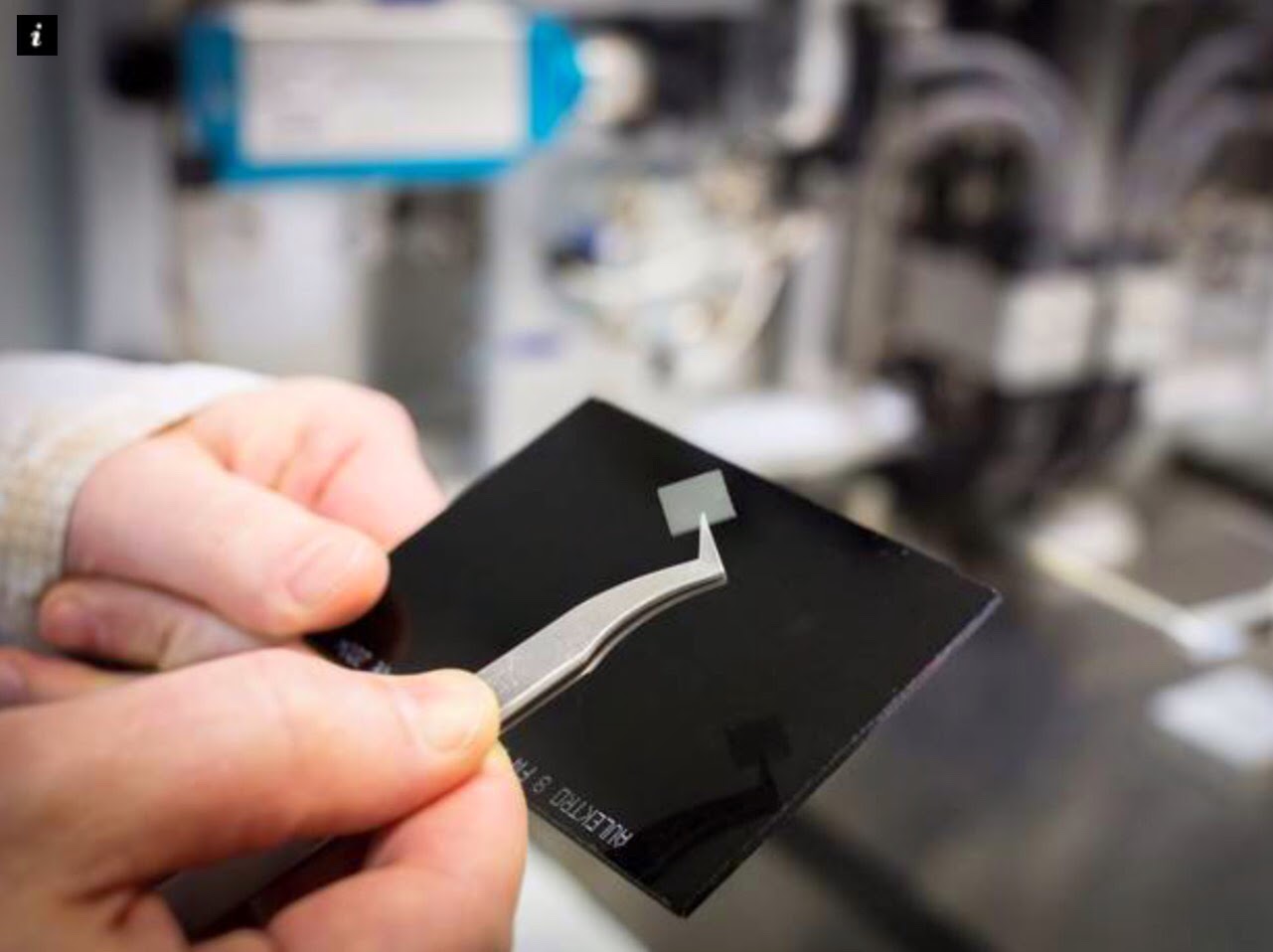
Researchers have discovered that graphene allows positively charged hydrogen atoms or protons to pass through it despite being completely impermeable to all other gases, including hydrogen itself.

The implications of the discovery are immense as it could dramatically increase the efficiency of fuel cells, which generate electricity directly from hydrogen, the scientists said.

The breakthrough raises the prospect of extracting hydrogen fuel from air and burning it as a carbon-free source of energy in a fuel cell to produce electricity and water with no damaging waste products.

“In the atmosphere there is a certain amount of hydrogen and this hydrogen will end up on the other side [of graphene] in a reservoir. Then you can use this hydrogen-collected reservoir to burn it in the same fuel cell and make electricity,” said Professor Sir Andrei Geim of Manchester Univeristy.

Ever since its discovery 10 years ago, graphene has astonished scientists. It is the thinnest known material, a million times thinner than human hair, yet more than 200 times stronger than steel, as well as being the world’s best conductor of electricity.

Until now, being permeable to protons was not considered a practical possibility, but an international team of scientists led by Sir Andre, who shares the 2010 Nobel Prize for his work on graphene, has shown that the one-atom thick crystal acts like a chemical filter. It allows the free passage of protons but forms an impenetrable barrier to other atoms and molecules.

“There have been three or four scientific papers before about the theoretical predictions for how easy or how hard it would be for a proton to go through graphene and these calculations give numbers that take billions and billions of years for a proton to go through this same membrane,” Sir Andrei said.

“It’s just so dense an electronic field it just doesn’t let anything through. But it’s a question of numbers, no more than that. This makes a difference between billions of years and a reasonable time for permeation. There is no magic,” he said.

The study, published in the journal Nature, shows that graphene and a similar single-atom material called boron nitride allowed the build-up of protons on one side of a membrane, yet prevented anything else from crossing over into a collecting chamber.

In their scientific paper, the researchers speculate that there could be many applications in the field of hydrogen fuel cells and in technology for collecting hydrogen gas from the atmosphere, which would open up a new source of clean energy.

“It’s really the very first paper on the subject so what we’re doing is really to introduce the material for other experts to think about it,” Sir Andrei said.

“It was difficult not to speculate. If you can pump protons from a hydrogen-containing gas into a chamber that doesn’t contain anything, you start thinking how you can exploit this?” he said.

“One of the possibilities we can imagine, however futuristic, which has to be emphasised because everything has been shown on a small scale, is applying a small electric current across the membrane and pushing hydrogen though the graphene or boron nitrite membrane,” he explained.

“Essentially you pump your fuel from the atmosphere and get electricity out of this fuel, in principle. Before this paper, this wouldn’t even be speculation; it would be science fiction. At least our paper provides a guidance and proof that this kind of device is possible and doesn’t contradict to any known laws of nature,” Sir Andre added.

Graphene: potential uses

Graphene is tough, about 200 times stronger than steel, yet incredibly light. It is considered the first two-dimensional material because it forms sheets of crystal that are just one atom thick.

It is also an excellent conductor of electricity, so is useful for anything involving electronics, such as bendable mobile phones and cameras, and wearable electrical devices attached to clothing.

Medical applications include its possible use as a material for delivering drugs to damaged sites within the body, which could open new avenues for treating patients with brain conditions such as Parkinson’s disease or cancer.

Graphene is also being developed as a new material for membranes involved in separating liquids. It could be used to purify water in the developing world or to create more efficient desalination plants.

Scientists also believe that graphene’s high strength and low weight can be harnessed in the making of new composite materials and polymers for the transport industry, making travel safer and more fuel efficient.

Now, it seems, graphene might also be used to generate new forms of generating clean electricity using hydrogen fuel cells, and even as a technology for harvesting hydrogen fuel from air. More


Friday, August 24, 2012

Scientists Produce Hydrogen for Fuel Cells Using an Inexpensive Catalyst Under Real-World Conditions

ScienceDaily (Aug. 23, 2012) — Scientists at the University of Cambridge have produced hydrogen, H2, a renewable energy source, from water using an inexpensive catalyst under industrially relevant conditions (using pH neutral water, surrounded by atmospheric oxygen, O2, and at room temperature).

Inexpensive catalyst
Lead author of the research, Dr Erwin Reisner, an EPSRC research fellow and head of the Christian Doppler Laboratory at the University of Cambridge, said: "A H2 evolution catalyst which is active under elevated O2 levels is crucial if we are to develop an industrial water splitting process -- a chemical reaction that separates the two elements which make up water. A real-world device will be exposed to atmospheric O2 and also produce O2 in situ as a result of water splitting."

Although H2 cannot be used as a 'direct' substitute for gasoline or ethanol, it can be used as a fuel in combination with fuel cells, which are already available in cars and buses. H2 is currently produced from fossil fuels and it produces the greenhouse gas CO2 as a by-product; it is therefore neither renewable nor clean. A green process such as sunlight-driven water splitting is therefore required to produce 'green and sustainable H2'.

One of the many problems that scientists face is finding an efficient and inexpensive catalyst that can function under real-world conditions: in water, under air and at room temperature. Currently, highly efficient catalysts such as the noble metal platinum are too expensive and cheaper alternatives are typically inefficient. Very little progress was made so far with homogeneous catalyst systems that work in water and atmospheric O2.

However, Cambridge researchers found that a simple catalyst containing cobalt, a relatively inexpensive and abundant metal, operates as an active catalyst in pH neutral water and under atmospheric O2.

Dr Reisner said: "Until now, no inexpensive molecular catalyst was known to evolve H2 efficiently in water and under aerobic conditions. However, such conditions are essential for use in developing green hydrogen as a future energy source under industrially relevant conditions.

"Our research has shown that inexpensive materials such as cobalt are suitable to fulfil this challenging requirement. Of course, many hurdles such as the rather poor stability of the catalyst remain to be addressed, but our finding provides a first step to produce 'green hydrogen' under relevant conditions." More


Wednesday, August 8, 2012

The Peak Oil Crisis: The Anomalous Heat Effect

The ages are coming faster all the time. The Stone Age lasted 3.4 million years, while the succeeding bronze and iron ages lasted only 2 or 3,000. In the last few centuries, however, "ages" have been coming at a breakneck pace -- the industrial age, the oil age, the air age, the nuclear age, the information age and others depending on how one likes to count such things. All this is by way of saying that the evidence continues to accumulate that we are getting close to entering a new age marked by the availability of nearly unlimited amounts of cheap, pollution-free energy currently locked within the nucleus of hydrogen atoms.

This age, which for the minute is being euphemistically called the age of the "anomalous heat effect", will undoubtedly be renamed after we all figure out just what we have going. As yet there has been no real "smoking gun" that will convince the most "it's too good to be true" skeptics that mankind is about to enter a new era, -- one that will be easily comparable to the agricultural revolution of 10,000 years ago or the industrial revolution a few centuries back. However there seems to be enough research taking place, accompanied by announcements of progress by reputable and knowledgeable individuals, to suggest we can expect solid proof that mankind is on to something shortly.

Although the detailed physics of this new energy producing phenomenon are as yet a matter of controversy, the general idea seems to be that hydrogen is first loaded into the metal lattice of nickel or palladium; then subjected to an electronic pulse or heat, which squeezes the proton (the hydrogen nucleus) so hard that it absorbs energy and an electron thereby turning itself into a low energy neutron. These neutrons in turn quickly combine into isotopes of hydrogen which then decay into helium giving off prodigious amounts of heat as they lose mass (Remember E=MC2). The amount of heat given off by this reaction is hundreds of thousands or perhaps millions of times more than would be produced if an atom of carbon were burned chemically (combustion) to produce heat.

There have been too many developments in this science of late to outline here, but thanks to the Information Age, they are reported, analyzed, sliced and diced in the numerous blogs and websites following the phenomenon. The bottom line is that so many reputable laboratories and scientists are now reporting that the "anomalous heat phenomenon" is for real and so many say they are making progress in engineering useful devices that can produce commercial amounts of heat, that those still skeptical or in denial simply have no idea what is going on out there. Moreover, a number of major corporations and parts of the U.S. and European governments seem to be well aware of the phenomenon and recognize its potential.

Public and media acceptance of "heat-from-hydrogen" still suffers from the premature announcements that were made 23 years ago and that resulted in much of the mainstream media hyping an ill-understood phenomenon that could not be readily reproduced at the time. Parts of this story, however, have been creeping into the fringes of the media of late and it is only a matter of time before realization of what is taking place sets in.

I have a number of colleagues who are aware of this new phenomena and willing to concede that it may be valid, but doubt that it can be developed and engineered into commercial products in time to prevent the disruptions that will accompany the peaking of oil production and other natural resources, and havoc caused by global warming. They indeed have a valid point. In the past, major new technologies such as the automobile, electronics, or the airplane have taken decades to come into sufficiently widespread use to have a real impact on society. More


Friday, May 29, 2009

Hydrogen Road Tour Whets Schwarzenegger's Appetite for Fuel Cell Cars


LOS ANGELES, California, May 27, 2009 (ENS) - Governor Arnold Schwarzenegger joined the 2009 Hydrogen Road Tour at Stop 6 today in West Los Angeles at the Shell hydrogen fueling station on Santa Monica Boulevard to check out the latest hydrogen vehicles and one of the newest hydrogen fueling stations in California.
"California set out to prove to the nation and world that low-carbon fuels and vehicles on our roads and highways are safe, affordable and viable,” said Governor Schwarzenegger. "This tour showcases what I envisioned five years ago when I launched the Hydrogen Highway."

"Our goal of a cleaner, greener and healthier California will require revolutionary new vehicle technologies and low-carbon fuels that will also spur the clean-tech economy," he said. More >>>